
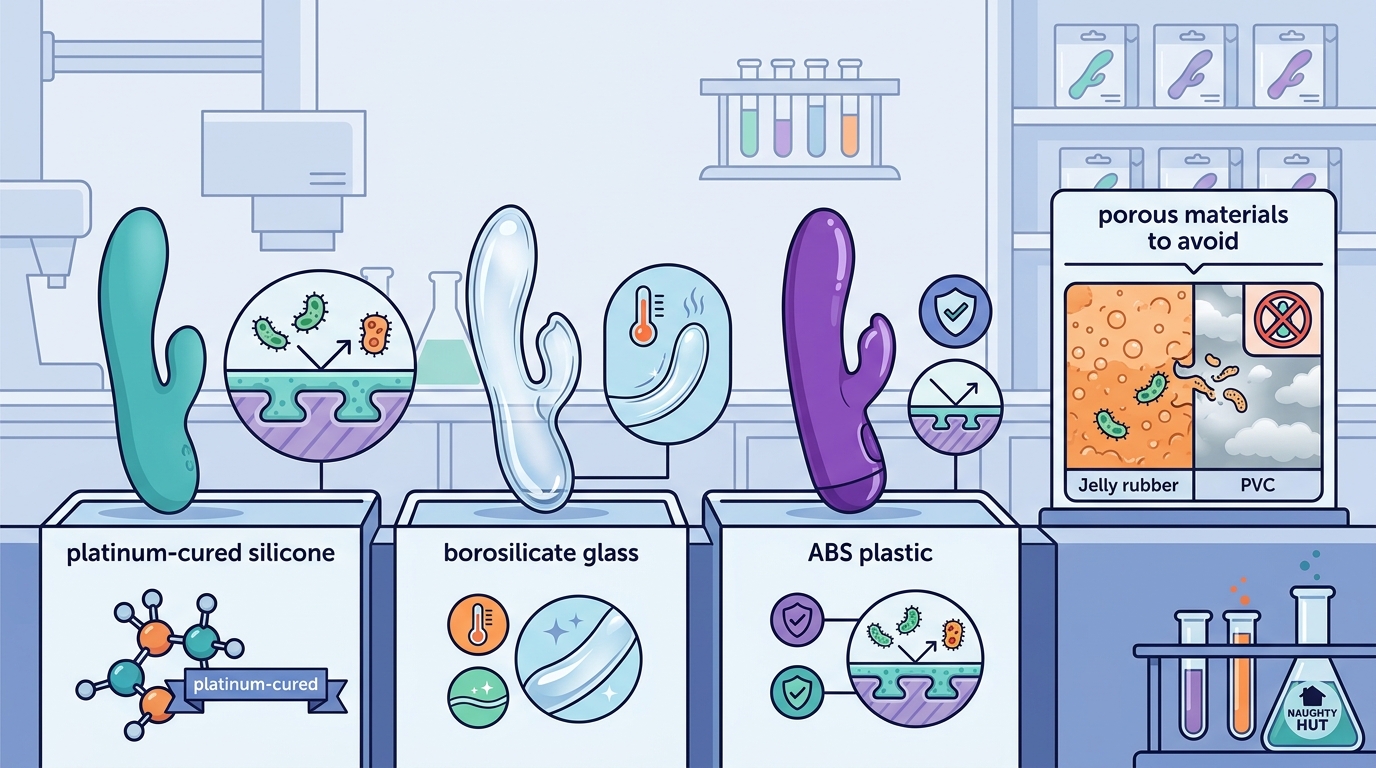
When selecting a vibrator, prioritize non-porous, medical-grade materials such as platinum-cured silicone, borosilicate glass, or ABS plastic. These body-safe options resist bacterial growth and do not leach harmful chemicals. Avoid porous materials like jelly rubber or PVC, which can harbor bacteria and contain phthalates. At Naughty Hut, we curate products from trusted brands that prioritize your health and safety. according to Hazardous Materials Information
Understanding Body-Safe Materials
Platinum-Cured Silicone
Borosilicate Glass and ABS Plastic
Borosilicate glass is another excellent body-safe option. It is non-porous, rigid, and easy to clean. Glass toys can be sterilized in boiling water, making them a favorite for those who prioritize hygiene. ABS plastic is a hard, non-porous plastic that is often used in budget-friendly vibrators. It is durable and easy to clean, though it lacks the softness of silicone. Both materials are safe for internal and external use. For additional details, review the .
Materials to Avoid for Health Safety
Not all materials are created equal. Some common materials found in low-cost vibrators pose significant health risks. Porous materials are substances that contain microscopic holes that can absorb fluids and bacteria, making them impossible to fully sterilize. These materials can lead to infections and irritation. It is crucial to identify and avoid these substances to protect your intimate health. For additional details, review the Customer Experience.
Jelly Rubber and PVC
Jelly rubber is a porous material that often contains phthalates, which are chemicals used to soften plastic. Phthalates have been linked to hormonal disruption and other health issues. Because jelly rubber is porous, it can trap bacteria even after washing. This makes it a poor choice for anyone concerned about hygiene or chemical exposure. Avoid any toy that has a strong chemical smell, as this is often a sign of low-quality materials.
Latex and Rubber
Latex is a natural rubber that is porous and can cause allergic reactions in some individuals. While some latex products may be safe for external use, they are not ideal for internal use due to their porosity. If you have a latex allergy, avoid all latex products. Look for toys labeled as latex-free or made from body-safe alternatives like silicone. Always check the product description for material specifications before purchasing.
How to Verify Material Safety
Verifying the safety of a vibrator requires careful attention to product details. Reputable retailers and manufacturers provide clear information about the materials used. Look for specific terms like "platinum-cured silicone" or "borosilicate glass" in the product description. Avoid vague terms like "rubber" or "jelly," which often indicate porous, unsafe materials. You can also check for certifications or quality standards that the manufacturer adheres to.
Reading Product Descriptions
Checking for Certifications
Some manufacturers obtain certifications that verify the safety and quality of their products. While there is no single universal standard for adult toys, certifications from recognized testing labs can provide additional assurance. Look for products that have been tested for heavy metals, phthalates, and other harmful substances. These certifications indicate that the manufacturer prioritizes safety and quality. They are a good indicator of a reputable brand.
Caring for Your Body-Safe Toys
Proper care is essential to maintain the safety and longevity of your vibrators. Even body-safe materials require regular cleaning to prevent bacterial growth. Wash your toys before and after each use with warm water and mild, fragrance-free soap. For non-motorized toys, you can boil them in water for a few minutes to sterilize them. Store your toys in a clean, dry place, ideally in individual pouches to prevent them from touching each other. Proper storage helps maintain the integrity of the materials. according to Hazardous Materials Information
Cleaning Non-Motorized Toys
Non-motorized toys, such as glass or silicone dildos, can be sterilized more thoroughly than motorized ones. Boiling is an effective method for sterilizing these items. Simply place the toy in a pot of boiling water for 3 to 5 minutes. Allow it to cool completely before storing. This method ensures that any bacteria or viruses are eliminated. It is a simple and effective way to maintain hygiene.
Cleaning Motorized Toys
Motorized toys require more careful cleaning to avoid damaging the electronics. Wipe them down with a damp cloth and mild soap, avoiding the charging ports and buttons. Do not submerge motorized toys in water unless they are explicitly labeled as waterproof. Use a soft cloth to dry them thoroughly before storage. Regular cleaning helps prevent the buildup of bacteria and maintains the toy's performance. Follow the manufacturer's instructions for specific cleaning guidelines.
Key Takeaways
- Choose non-porous materials like platinum-cured silicone, borosilicate glass, or ABS plastic for body-safe vibrators.
- Avoid porous materials such as jelly rubber and PVC, which can harbor bacteria and contain harmful chemicals.
- Read product descriptions carefully to verify material safety and avoid vague terms.
- Look for certifications or quality standards that indicate the manufacturer prioritizes safety.
- Clean your toys regularly with warm water and mild soap to maintain hygiene.
- Store your toys in a clean, dry place to prevent damage and bacterial growth.
Frequently Asked Questions
Is silicone always body-safe?
Not all silicone is body-safe. Look for "platinum-cured silicone," which is non-porous and free from harmful byproducts. Standard silicone may contain platinum-free catalysts that can be less safe. Always check the product description for specific material details.
Can I use a vibrator with a latex allergy?
Yes, you can use vibrators made from body-safe materials like silicone, glass, or ABS plastic. These materials are latex-free and safe for individuals with latex allergies. Avoid toys made from natural rubber or latex.
How do I clean a motorized vibrator?
Wipe the toy down with a damp cloth and mild, fragrance-free soap. Avoid submerging it in water unless it is labeled as waterproof. Dry it thoroughly before storing. Follow the manufacturer's instructions for specific cleaning guidelines.
Are cheap vibrators safe?
Cheap vibrators are often made from porous materials like jelly rubber, which can be unsafe. They may contain phthalates and other harmful chemicals. It is best to invest in higher-quality, body-safe materials from reputable brands.
How do I know if a toy is non-porous?
Check the product description for terms like "platinum-cured silicone," "borosilicate glass," or "ABS plastic." These materials are non-porous. Avoid vague terms like "rubber" or "jelly," which often indicate porous materials.
Can I sterilize a silicone vibrator?
Yes, you can sterilize non-motorized silicone toys by boiling them in water for 3 to 5 minutes. Do not boil motorized toys, as this can damage the electronics. Wipe motorized toys down with a damp cloth and mild soap.
Where can I find body-safe vibrators in New Zealand?
Conclusion
Choosing the right materials for your vibrator is essential for your health and safety. Prioritize non-porous, body-safe materials like platinum-cured silicone, borosilicate glass, or ABS plastic. Avoid porous materials like jelly rubber and PVC. At Naughty Hut, we are committed to providing you with safe, high-quality products. Explore our collection to find the perfect vibrator that meets your needs and safety standards.